LA ROSSA CHE SBANCA A MONTECARLO

Quello del Gran Premio di Montecarlo è stato davvero un weekend memorabile per la Rossa. Cerchiamo di scoprire i motivi di questo predominio considerando le tante variabili presenti in un tracciato del genere e senza andare troppo nel dettaglio per evitare di incappare in conclusioni non corrette.

Per prima cosa andiamo a delineare brevemente le caratteristiche del circuito di Montecarlo: come sapete è il circuito più lento del mondiale, ma anche uno fra i più tecnici e difficili.
Su questa pista le differenze motoristiche si tendono ad appiattire e a far la differenza sono i telai e l'aerodinamica, ci sono infatti solo due zone di allungo: la salita fino al casinò e la zona del tunnel.
Analizzando invece i settori, nel primo, quello più veloce conta un po' il Cx e c'è bisogno di una vettura precisa che non soffra di sottosterzo per affrontare al meglio le due curve del casinò.
Il secondo è un settore più vario, con una prima zona esclusivamente di trazione, per poi lasciare posto al carico e al bilancio aerodinamico.
Per concludere il terzo è un settore esclusivamente di trazione, dove l'erogazione della potenza, il telaio e un corretto bilancio meccanico sono fondamentali.
Ma la caratteristica più importante a Montecarlo è il piede del pilota, sta a lui staccare le scritte degli sponsor dai muretti per guadagnare decimi, dunque risulta più che mai fondamentale il richiamo al grafico dove viene messo a confronto il tempo segnato nel Q3 contro quello ideale (dato dalla somma dei migliori settori).
Su questa pista le differenze motoristiche si tendono ad appiattire e a far la differenza sono i telai e l'aerodinamica, ci sono infatti solo due zone di allungo: la salita fino al casinò e la zona del tunnel.
Analizzando invece i settori, nel primo, quello più veloce conta un po' il Cx e c'è bisogno di una vettura precisa che non soffra di sottosterzo per affrontare al meglio le due curve del casinò.
Il secondo è un settore più vario, con una prima zona esclusivamente di trazione, per poi lasciare posto al carico e al bilancio aerodinamico.
Per concludere il terzo è un settore esclusivamente di trazione, dove l'erogazione della potenza, il telaio e un corretto bilancio meccanico sono fondamentali.
Ma la caratteristica più importante a Montecarlo è il piede del pilota, sta a lui staccare le scritte degli sponsor dai muretti per guadagnare decimi, dunque risulta più che mai fondamentale il richiamo al grafico dove viene messo a confronto il tempo segnato nel Q3 contro quello ideale (dato dalla somma dei migliori settori).

Nonostante la complessità del circuito e la difficoltà di guida di queste nuove vetture i piloti sono stati molto bravi e in generale non si sono discostati di molto dalla loro performance ideale.
Bisogna sottolineare che Raikkonen aveva nel piede ancora un decimo abbondante, un dato molto interessante per quanto riguarda la sfida tra Mercedes e Ferrari.
Questo decimo lo ha perso nel primo settore, in particolare in curva 1, dove ha avuto un sovrasterzo che lo ha rallentato molto. E' proprio li che Vettel ha guadagnato su Kimi (parlando sempre dell'ultimo giro del Q3), ma proprio all'inizio del secondo settore (in curva 5) ha avuto un bloccaggio che gli ha fatto perdere la corda della curva, facendogli perdere il vantaggio che aveva.
Come si può notare anche dai grafici con i distacchi percentuali (in fondo alla pagina) Kimi guadagnerà poi tempo su Seb grazie ad una guida più pulita nel terzo settore, portandolo così alla pole.
 |
| Vettel arriva alla fine del primo settore in vantaggio su Kimi |
 |
| Blocca poi perdendo la corda |
 |
| I due sono di nuovo appaiati e da li Kimi guadagnerà su di lui nel terzo settore |

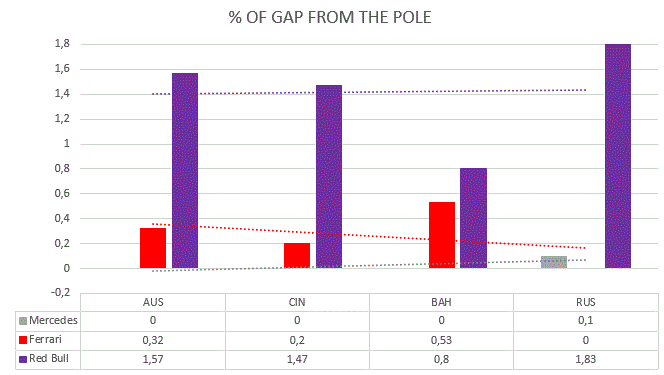
Parlando proprio del confronto Ferrari Mercedes, risulta interessante un richiamo al grafico in cui viene riportato il distacco percentuale dalla pole dei tre top team. Mentre la Red Bull sta pian piano tornando a farsi vedere, con un trend molto positivo iniziato dal Bahrain per quanto riguarda la pole, la situazione si è esattamente invertita rispetto alla Spagna, con la Mercedes ad uno 0,06% dalla Ferrari, che di fatto ha conquistato ben due delle ultime tre qualifiche, con l'eccezione della Spagna, dove Hamilton si era trovato davvero a suo agio con la vettura.

Ed è proprio questo il problema della Mercedes: la difficoltà a trovare un set up meccanico corretto che dia la necessaria fiducia al pilota per spingere al massimo e che permetta di mantenere le coperture nel giusto range di temperatura. Su un circuito da basse velocità dove non si può sfruttare il carico per mettere temperatura sulle gomme, la Mercedes si è ritrovata ad avere problemi per scaldare le gomme anteriori che si sono poi abbinati ai già ben noti problemi di sovrariscaldamento di quelli posteriori. Dagli onboard si notava una vettura con molto rollio, dunque con un set up meccanico più "morbido" proprio per poter sopperire al sovrariscaldamento del posteriore e avere così più trazione.
Guardando infatti il grafico con il distacco percentuale nel terzo settore si nota che Bottas è stato effettivamente il più veloce proprio nel settore dove gli sforzi di trazione contano di più, a conferma di un set up azzeccato per quanto concerne l'accelerazione, ma forse sbagliato nelle zone più veloci e con cambi di direzione rapidi (il settore in cui ha perso di più è stato proprio il secondo).
L'ultimo giro del Q3 è stato di fatto l'unico giro dove Bottas sembra essere riuscito a portare nel range di temperatura corretto le gomme, guadagnando di fatto ben 7 decimi dal Q2. Un' enormità anche se teniamo conto della mappatura più aggressiva che avrà utilizzato.
Se il problema della Mercedes è di fatto la mancanza della sospensione idraulica che andava a correggere tutti i problemi in rollio e in beccheggio, (è qui che dovrà andare a concentrarsi durante la stagione), ricordiamoci del problema della Ferrari in ambito affidabilità, specialmente in vista di un circuito molto stressante per i motori come quello di Montreal.

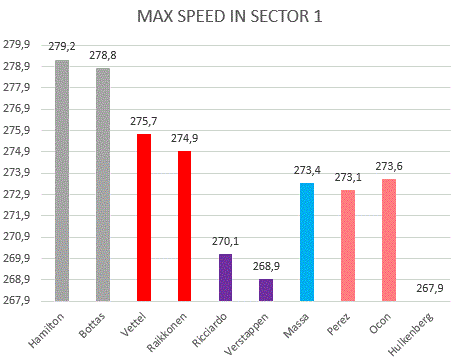
Per quanto riguarda gli assetti aerodinamici possiamo notare un'ottima efficienza di Ferrari e Mercedes con velocità molto alte anche in presenza di un alto livello di carico. I team più piccoli come Toro Rosso, Haas e Mclaren hanno invece optato per degli assetti molto carichi.

Dai grafici sui vari settori oltre a quanto vi ho già accennato prima possiamo notare che il settore dove Ferrari e Mercedes hanno fatto di più la differenza è stato il primo, grazie al loro minor Cx, mentre nel secondo Raikkonen ha davvero sbaragliato tutti.
 Fra gli outsiders Grosjean è quello che ha stupito di più con un tempo ideale vicinissimo a quello della Red Bull di Ricciardo, a conferma di un grande telaio della sua Haas visti gli ottimi tempi nel secondo e nel terzo settore. Anche Force India e Mclaren confermano la bontà del telaio e del sistema sospensivo delle loro vetture. Force India è andata forte perchè ha potuto caricare la vettura senza preoccuparsi dell'efficienza in rettilineo, mentre Mclaren ha potuto nascondere l'imbarazzante PU che si ritrova.
Per il momento è tutto, non ho voluto dilungarmi troppo perché in un circuito così complesso e dove il pilota può ancora fare davvero la differenza, analizzare dall'esterno i dati emersi può portare fuoristrada, In Canada ci saranno di sicuro nuovi e più interessanti spunti di analisi sulla battaglia per il mondiale tra Ferrari e Mercedes.
Ciao e sempre #keepushing !!!


GRAFICI SULLA GARA